Research Project
An AI-Driven Environmental Monitoring & Early Warning Platform for Low-Resource Settings
Leveraging AI, IoT and embedded systems to support proactive response to environmental hazards and mitigate the adverse impact of climate change across Sub-Saharan Africa.
Overview
Research Overview
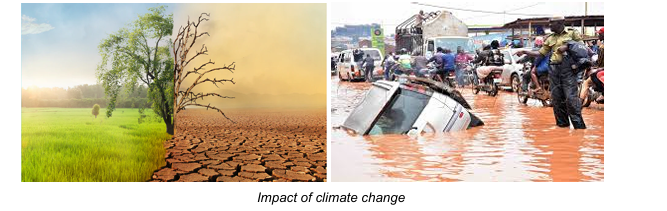
Environmental monitoring stations remain sparse and costly in low-resource environments especially Sub-Saharan Africa (SSA), leading to gaps in high-resolution local data. This research aims to build low-cost low-power remote sensor technologies for reliable monitoring of significant environment parameters. This will facilitate collection and maintenance of large open datasets to assist in characterization of environmental phenomena and forecasting of potential extreme environmental conditions in low-resource environments. This work demonstrates how AI, IoT and embedded systems can be leveraged for reliable environmental monitoring and early warning by supporting proactive and timely response to environmental hazards and mitigating the adverse impact of climate change in low-resource settings.
Goals
Core Objectives
- Design and deploy low-cost sensor nodes for collecting vital environmental parameters.
- Enhance reliability of low-cost sensor data using AI-driven calibration.
- Provide predictive insights and localized early-warnings to stakeholders.
- Evaluate performance through structured field validation.
Approach
Methodology
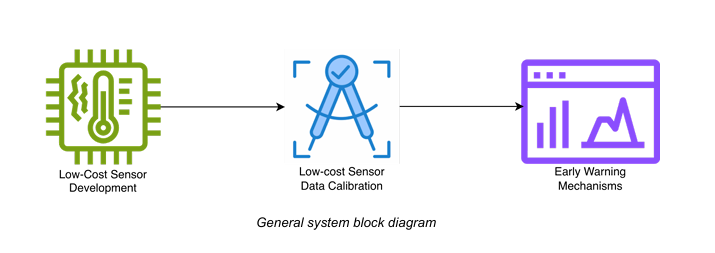
This research integrates three (3) major components i.e., (i) design and development of low-cost sensors (ii) AI-based calibration of low-cost sensor data, and (iii) development of AI-based early warning mechanisms.
Low-Cost Sensor Development
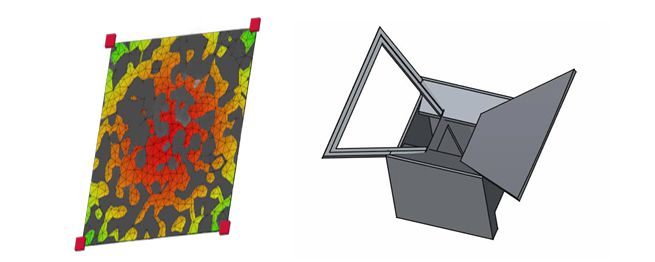
This involves design and development of acoustic based low-cost low-power remote sensor nodes for measurement of environmental parameters of wind speed, wind direction, and precipitation.
In addition, it entails the development of low-cost weather stations and Air Quality (AQ) nodes in conjunction with partners from Carnegie Mellon University (CMU) Africa. The low-cost weather stations measure crucial environmental parameters of temperature, humidity, rainfall, wind speed, and wind direction, while the AQ nodes measure particulate matter.
Low-Cost Sensor Data Calibration
Low-cost sensors are limited in accuracy and their readings often require calibration before being used for reliable environmental monitoring. To improve accuracy, data from the developed low-cost sensor nodes will be calibrated using AI techniques, particularly ML models. The developed sensor nodes will be co-located with standard environmental monitoring stations and the calibration models will be developed with reference to environmental data from the standard monitors.
Early Warning Mechanisms
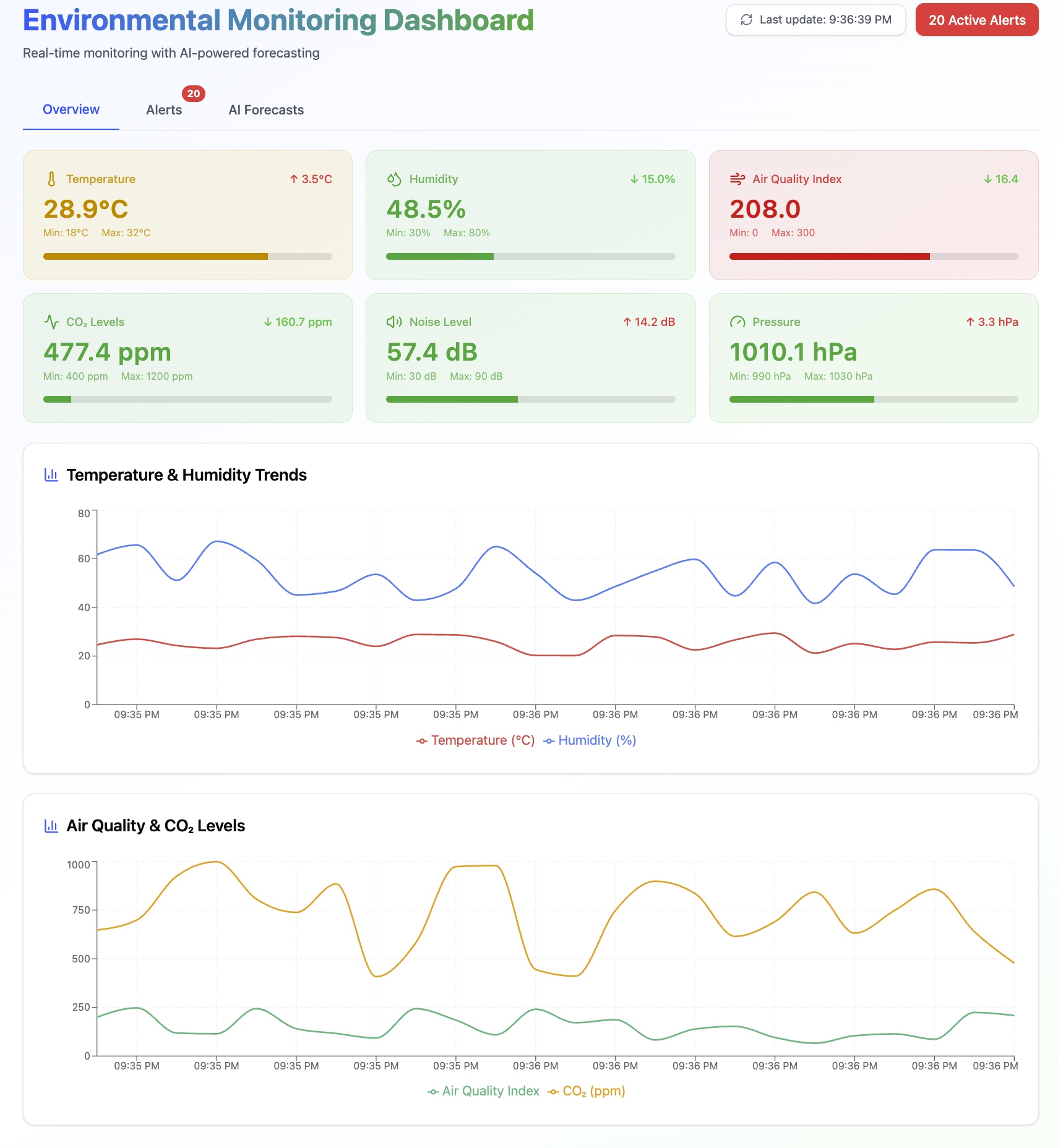
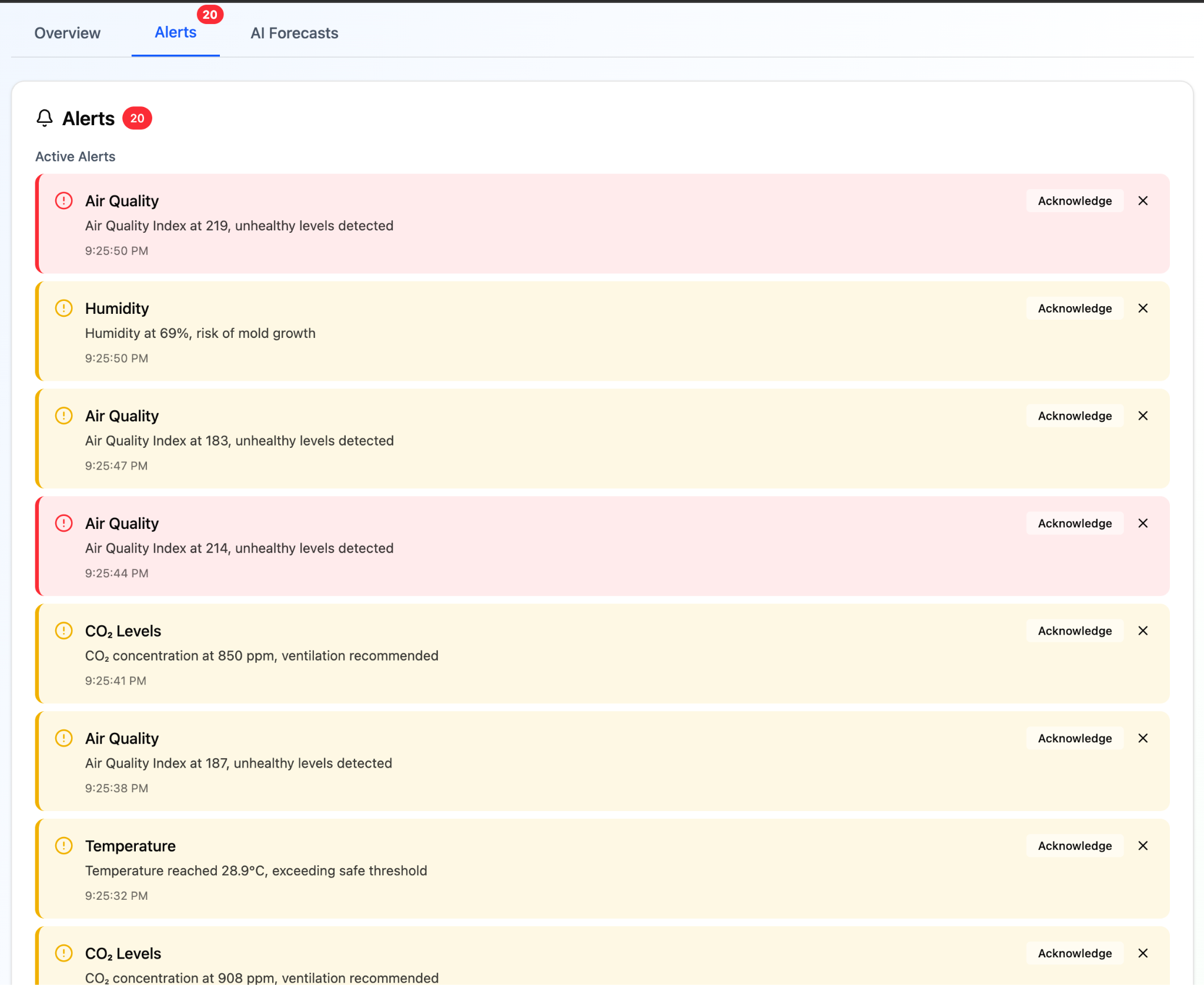
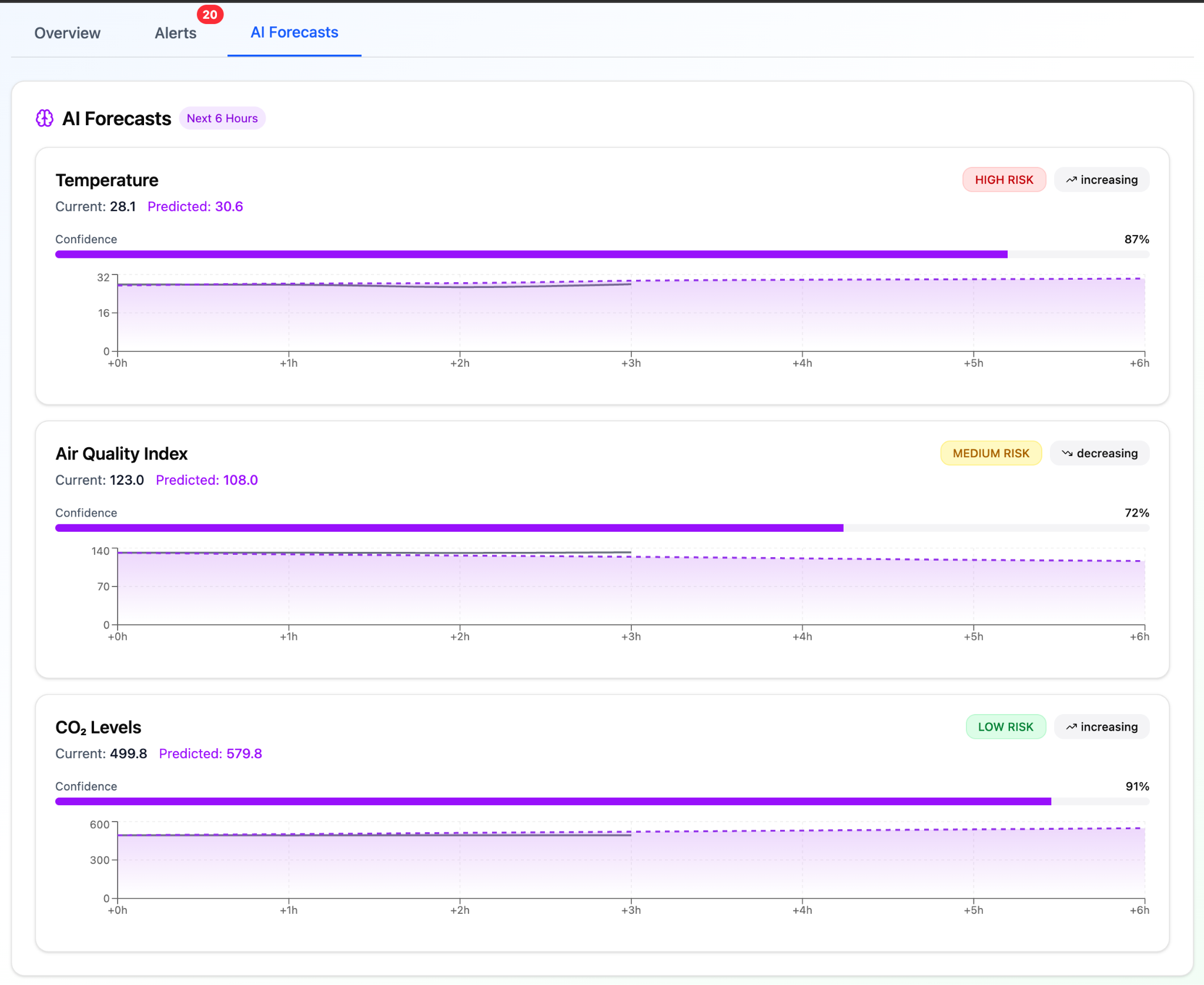
This involves training models using time series machine learning approaches on the calibrated sensor data to forecast extreme environmental conditions. A centralized AI-powered web dashboard that integrates real-time monitoring, predictive analysis, and dissemination of alerts will be developed to provide decision support to stakeholders. In addition, alternative alert mechanisms such as Short Message Services (SMS), physical alarms, and mobile applications will be employed. Furthermore, alerts will be issued in several languages based on the receivers' location, allowing the targeted stakeholders to better understand the early warning.
Outcomes
Research Impact
- Development of low-cost sensor nodes enables wider and denser deployment of environmental monitoring stations across SSA.
- AI-enabled calibration improves the accuracy of low-cost sensor data, resulting in reliable environmental monitoring and early warning.
- AI-driven early warning mechanisms allow stakeholders to proactively respond to extreme environmental conditions.
- Open datasets, AI models, and approaches shared with the wider research community.
Collaboration
Partners and Collaborators









People
Research Team

Dr. Andrew Katumba

Dr. Edwin Mugume

Wayne Steven Okello

Marvin Jagen