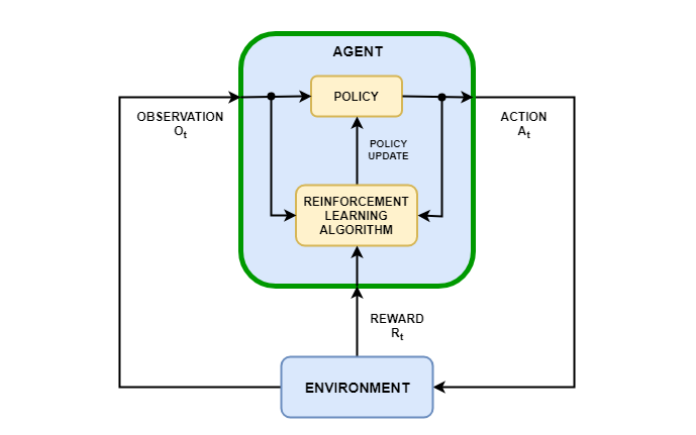
The project investigates the traffic jam problem at one of the junctions in Kampala, Uganda, Wandegeya junction. At Wandegeya junction, existing traffic light control causes long delays, air pollution, energy waste, accidents, and many other problems. Through Kampala Capital City Authority (KCCA), the government of Uganda has tried to solve this problem using different technologies like radar, but it did not help much. The project studies the traffic signal’s duration based on the data collected manually by counting cars and data from KCCA. The machine learning-based model was developed to control the traffic light(agent). Q-learning was used; it is a model-free reinforcement algorithm. Q-learning learned the actions of the agent and powers neural network to predict better steps to take. The model was evaluated via Simulation of Urban Mobility (SUMO) in a vehicular network, and the simulation results showed the efficiency of this model in controlling traffic lights.