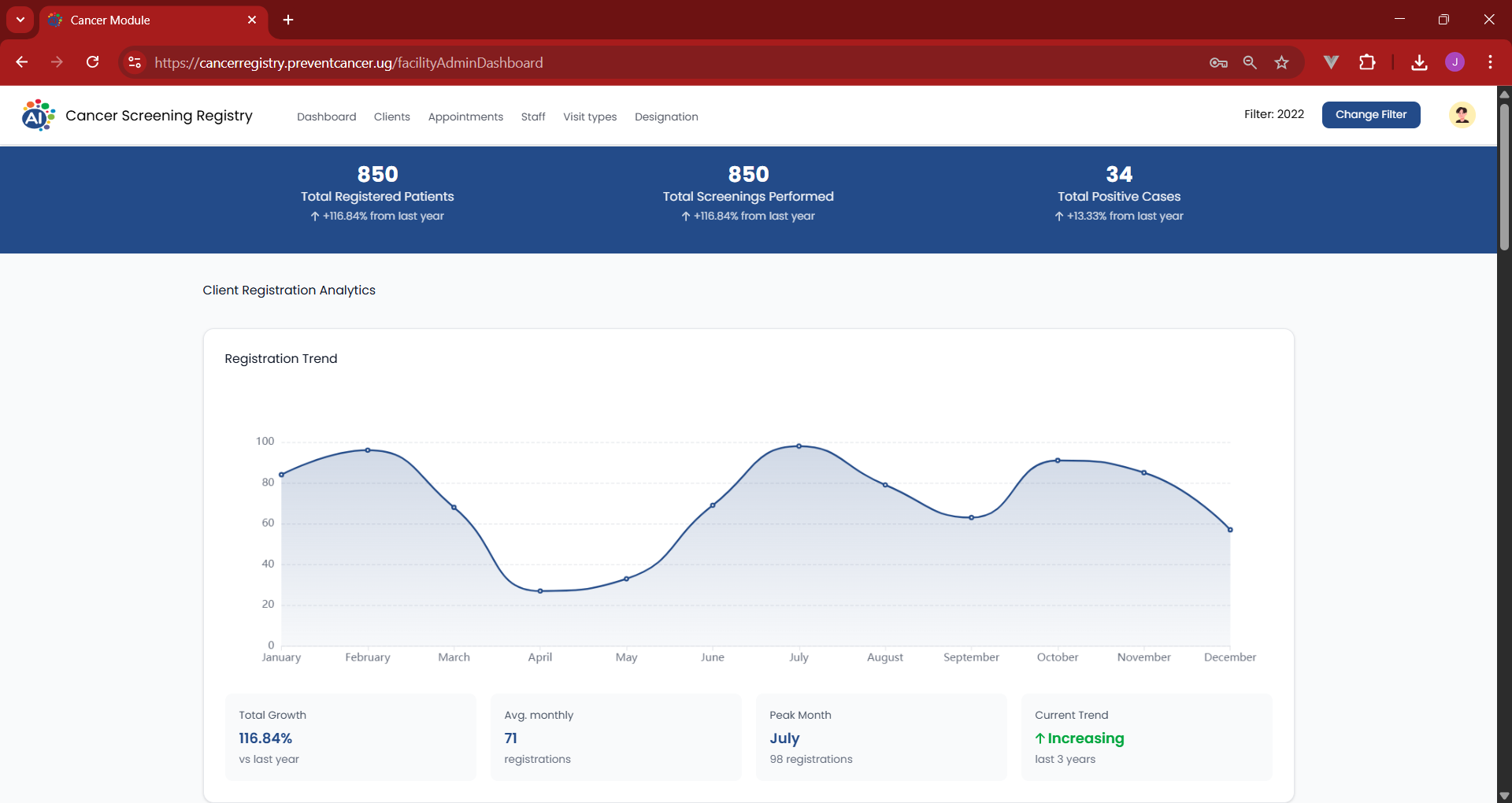
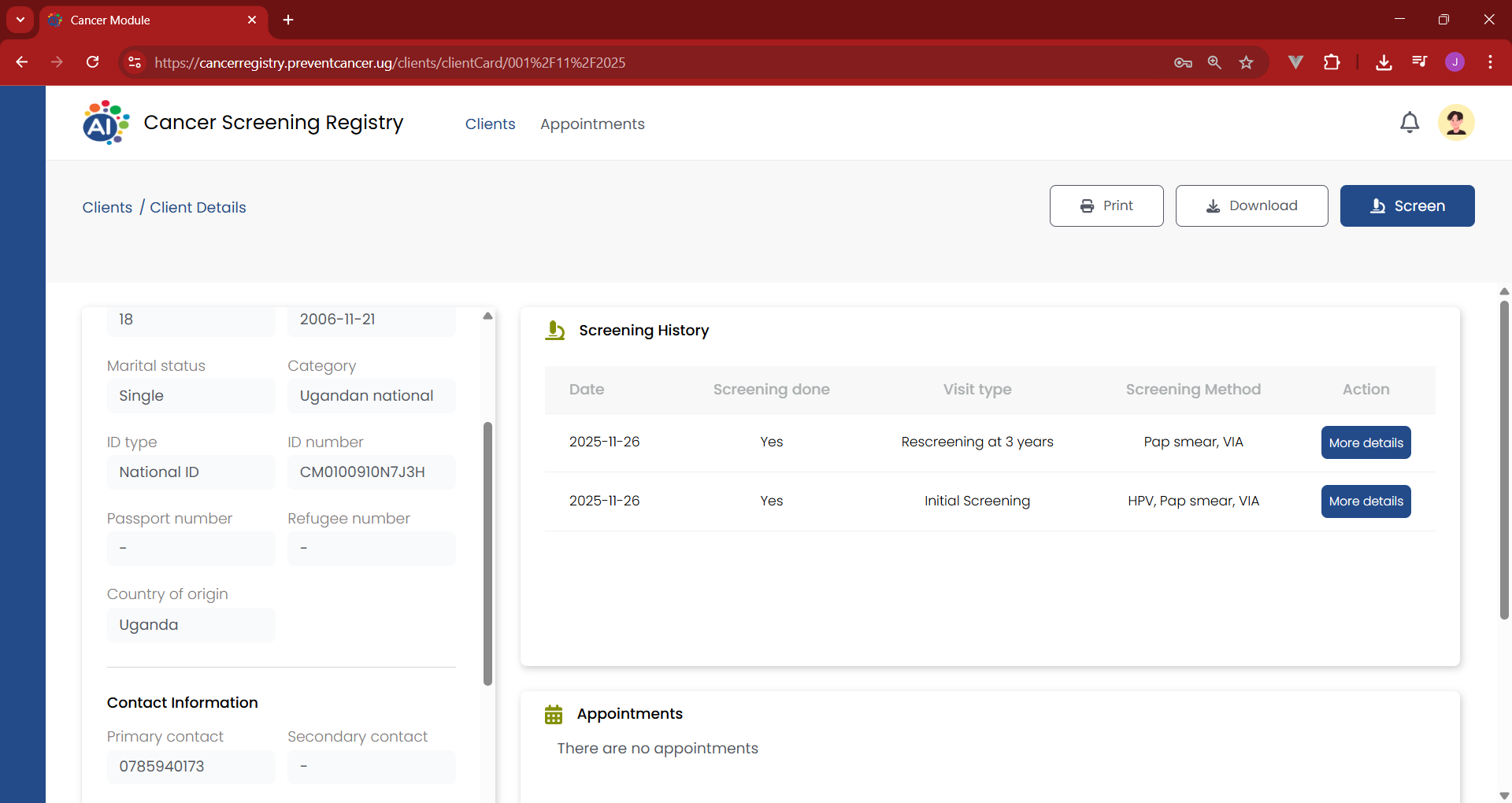
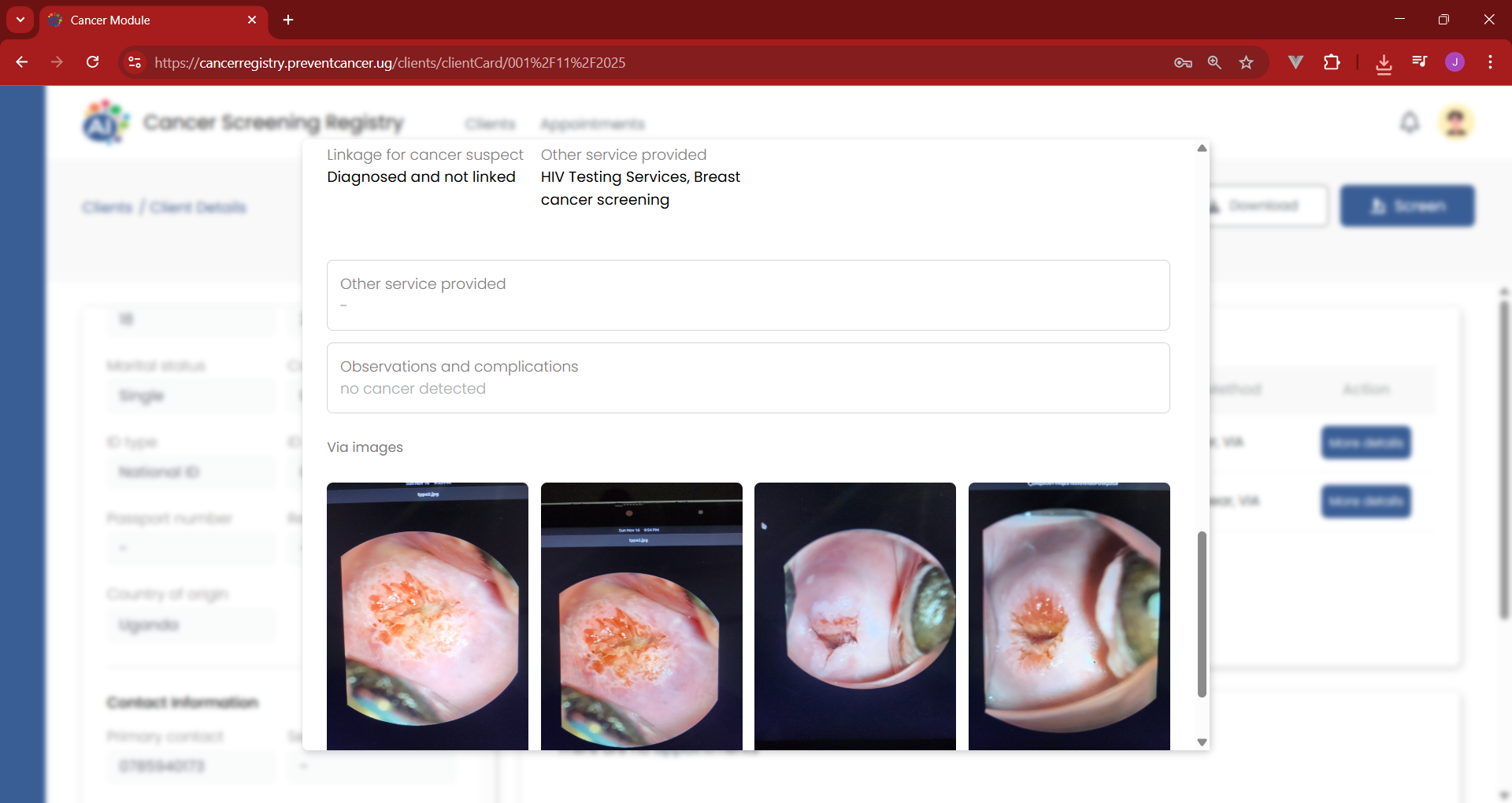
Cancer is a major contributor to Uganda’s growing non-communicable disease burden, with cervical cancer being the most common cancer among women, accounting for an estimated 6,400–7,000 new cases annually. Despite the availability of effective screening methods, cervical cancer care remains fragmented, with patients moving across multiple points of care and health facilities without seamless data continuity.
To address this challenge, we are piloting an open-source, private Health Information Exchange (HIE) to support cancer screening and continuity of care in low-resource settings. Cervical cancer was selected for the pilot due to its high prevalence and the existence of a Ministry of Health (MoH) approved national screening registry, which provides a standardized foundation for implementation.
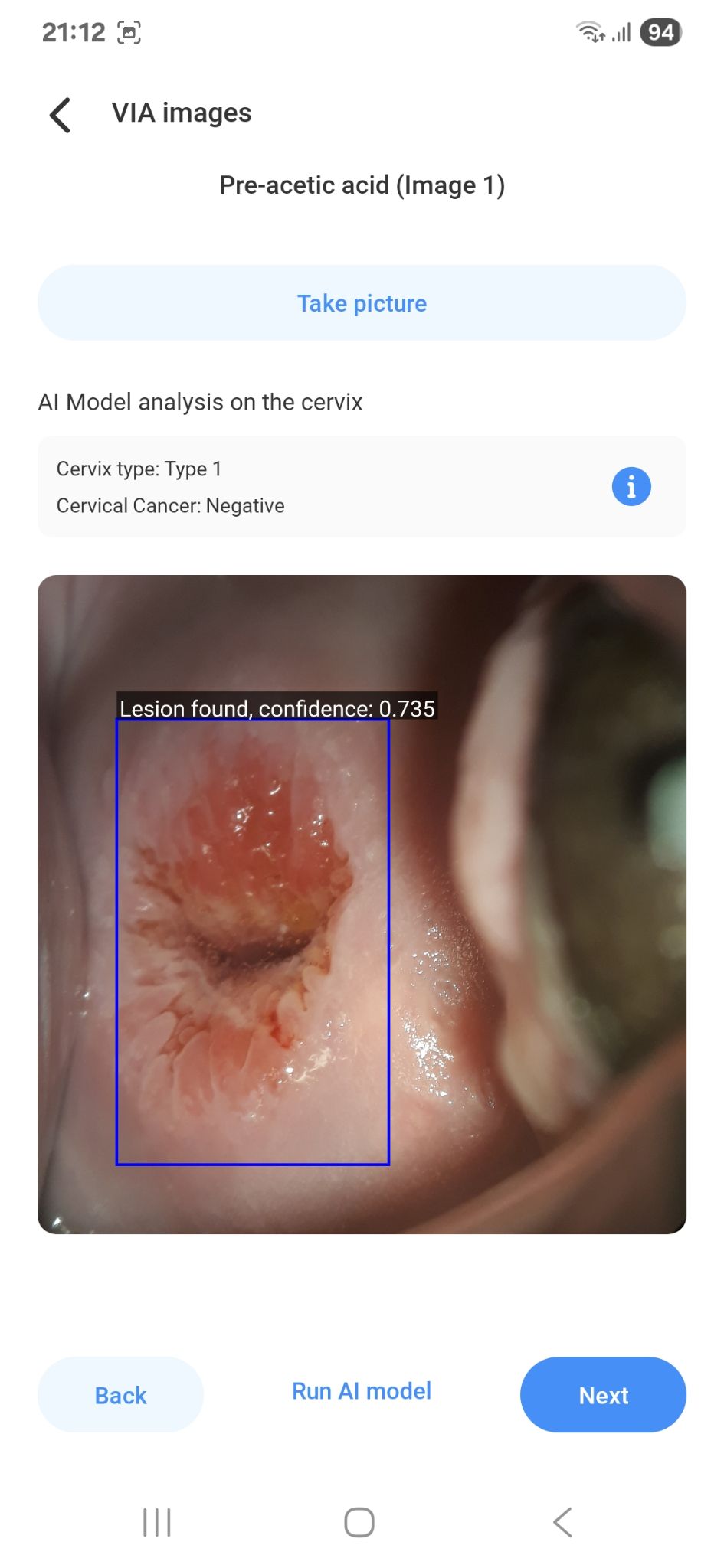
The HIE enables secure, longitudinal sharing of screening data across facilities, supporting coordinated workflows, patient follow-up, and continuity of care. Given the widespread use of Visual Inspection with Acetic Acid (VIA) as a low-cost screening method, the system integrates a machine-learning based screening support module to assist clinicians with image review, decision support, and expert consultation.
The platform is built entirely on open-source technologies, including a Master Patient Index for patient identity management, an interoperability layer compliant with HL7-FHIR standards, a shared health record for longitudinal screening data, and a real-time analytics pipeline to support monitoring and reporting. The system is designed to be privacy-preserving and HIPAA-compliant, ensuring that only authorized users can access patient data.
As part of the pilot, the HIE has successfully ingested 2,746 retrospective screening records from multiple facilities including Uganda Cancer Institute, Jinja Regional Referral Hospital, and Kigandalo Health Centre IV demonstrating its ability to integrate longitudinal data from diverse sources. The system has been demonstrated to the Ministry of Health and used in training engagements with clinicians, following MoH approval. Planned next steps include onboarding additional datasets and piloting live deployment at Mbarara Regional Referral Hospital.