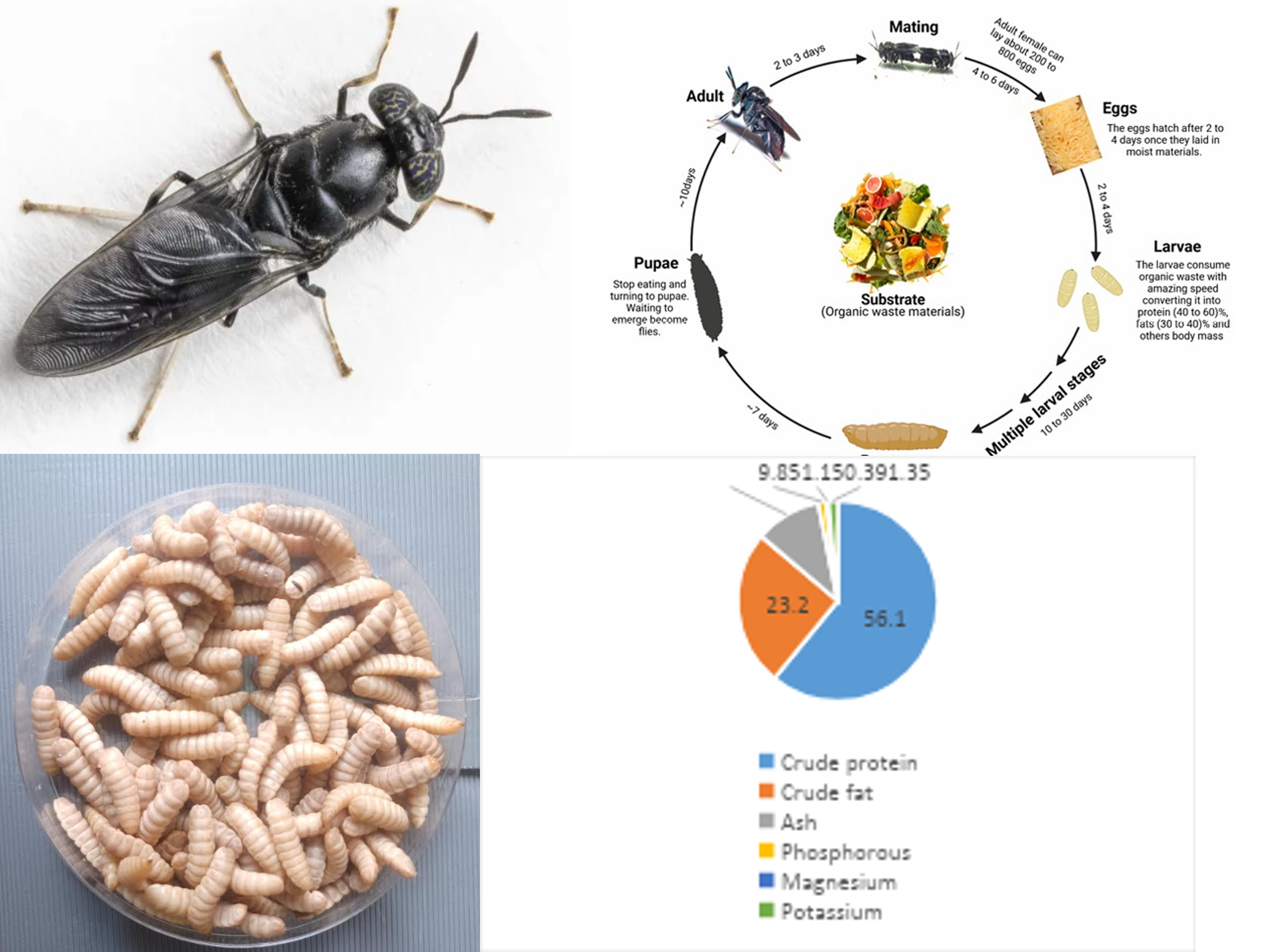
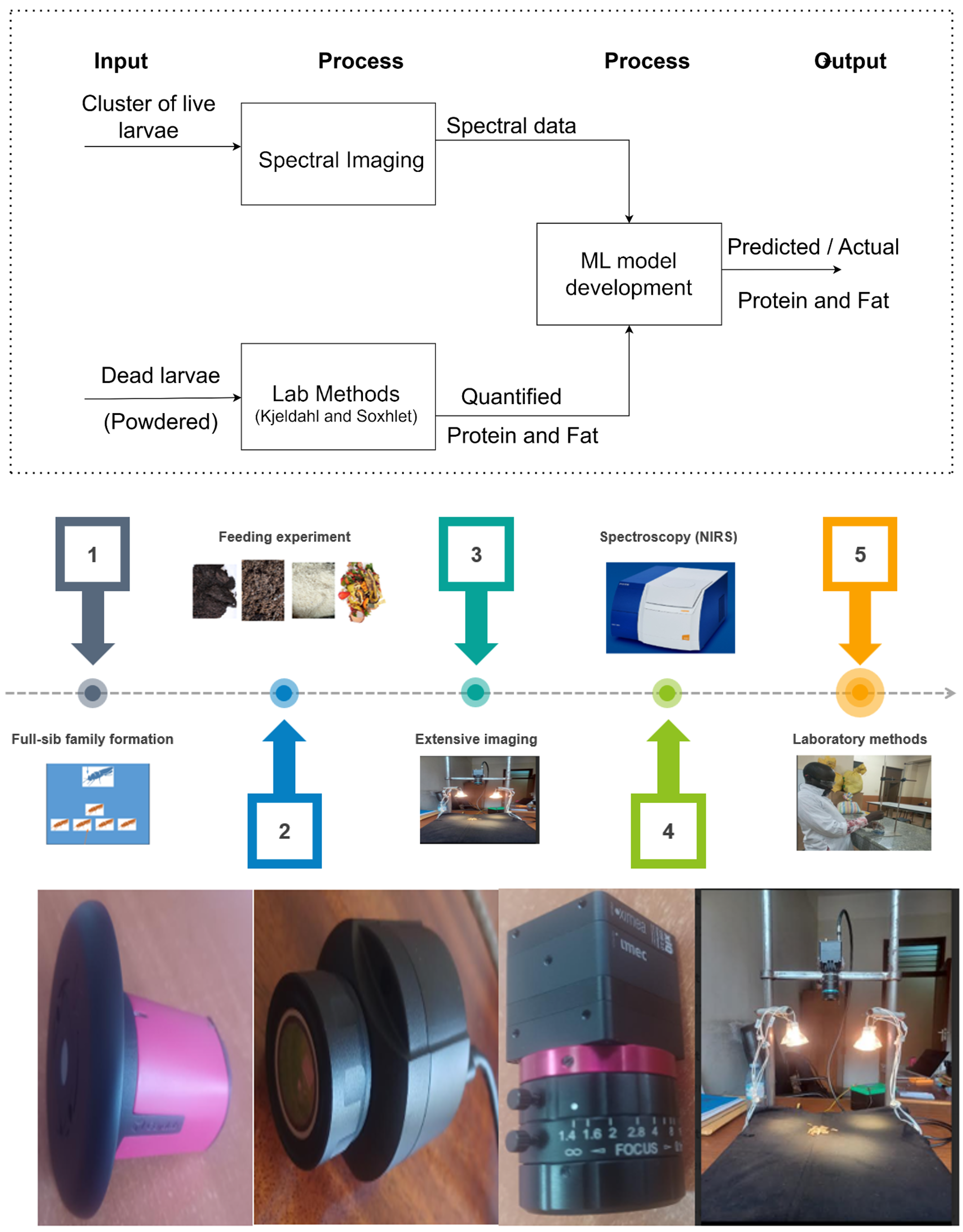
The Black Soldier Fly larvae (BSFL: Hermetia illucens) have gained attention as a sustainable alternative protein and fat source for animal feeds, due to their high protein and fat content. This work proposes using emerging technologies such as Hyperspectral Imaging, Spectroscopy, and Chemometric methods to predict protein and fat content in BSF. Accurate determination of protein and fat is critical for optimizing production and ensuring quality. Conventional chemical analysis methods are precise but often destructive, time-consuming, and unsuitable for large-scale analysis. This study develops non-destructive, high-throughput methods for predicting the nutritional content of BSFL using spectral imaging, spectroscopy and machine learning. Different spectral sensors and cameras capture a broad range of spectral information from BSFL. This enables detailed analysis of chemical composition without destroying physical samples and supports a more sustainable, efficient, and environmentally friendly nutritional composition analysis. Spectral signatures extracted from BSFL hyperspectral images will undergo preprocessing to enhance signal quality and reduce noise. These processed spectra will then be used to derive informative spectral features for subsequent analysis. These features will be combined with respective ground truth data to train and validate a machine learning models using model performance metric parameters. Results will demonstrate that the developed models accurately predict BSFL protein and fat content. This approach offers a rapid, non-destructive alternative to traditional chemical analyses, making it suitable for real-time monitoring and quality control in BSFL production. The study shows the potential of integrating hyperspectral imaging and machine learning to advance precision nutrition analysis in the insect protein industry.